Introduction to Internal and External Liquidity
Introduction to Internal and External Liquidity


Introduction
The concept of Internal Range Liquidity to External Range Liquidity is very simple to understand. It is built around two major concepts: swing points and Fair Value Gaps.
These two concepts form the foundation of the entire framework. Swing points are used as External Range Liquidity (ERL), while Fair Value Gaps are used as Internal Range Liquidity (IRL).
Swing Point
A swing point consists of three candles, where the middle candle extends beyond the candles on either side of it. This formation is what creates a swing high or a swing low in price.
For a swing low to occur, the candle in the middle must be lower than the candle on the left and the candle on the right.
For a swing high to occur, the candle in the middle must be higher than the candle on the left and the candle on the right.

Swing points can appear in different variations, but the core concept always remains the same. As long as the middle candle extends beyond the candle on the left and the candle on the right, regardless of how the formation appears, it is still considered a valid swing point.

Fair Value Gap
A Fair Value Gap is an inefficiency in price delivery that occurs when price moves aggressively in one direction, leaving behind an imbalance in the market. This usually happens when strong buying or selling pressure causes price to move rapidly, preventing certain price levels from being efficiently traded through.
A Fair Value Gap consists of three candles.
The first candle can form normally, but the second candle must be an impulsive displacement candle showing strong momentum. The third candle then determines whether a Fair Value Gap has been created.
In a bullish scenario, the low of the third candle must not overlap with the high of the first candle. The gap left between the high of the first candle and the low of the third candle becomes the bullish Fair Value Gap.
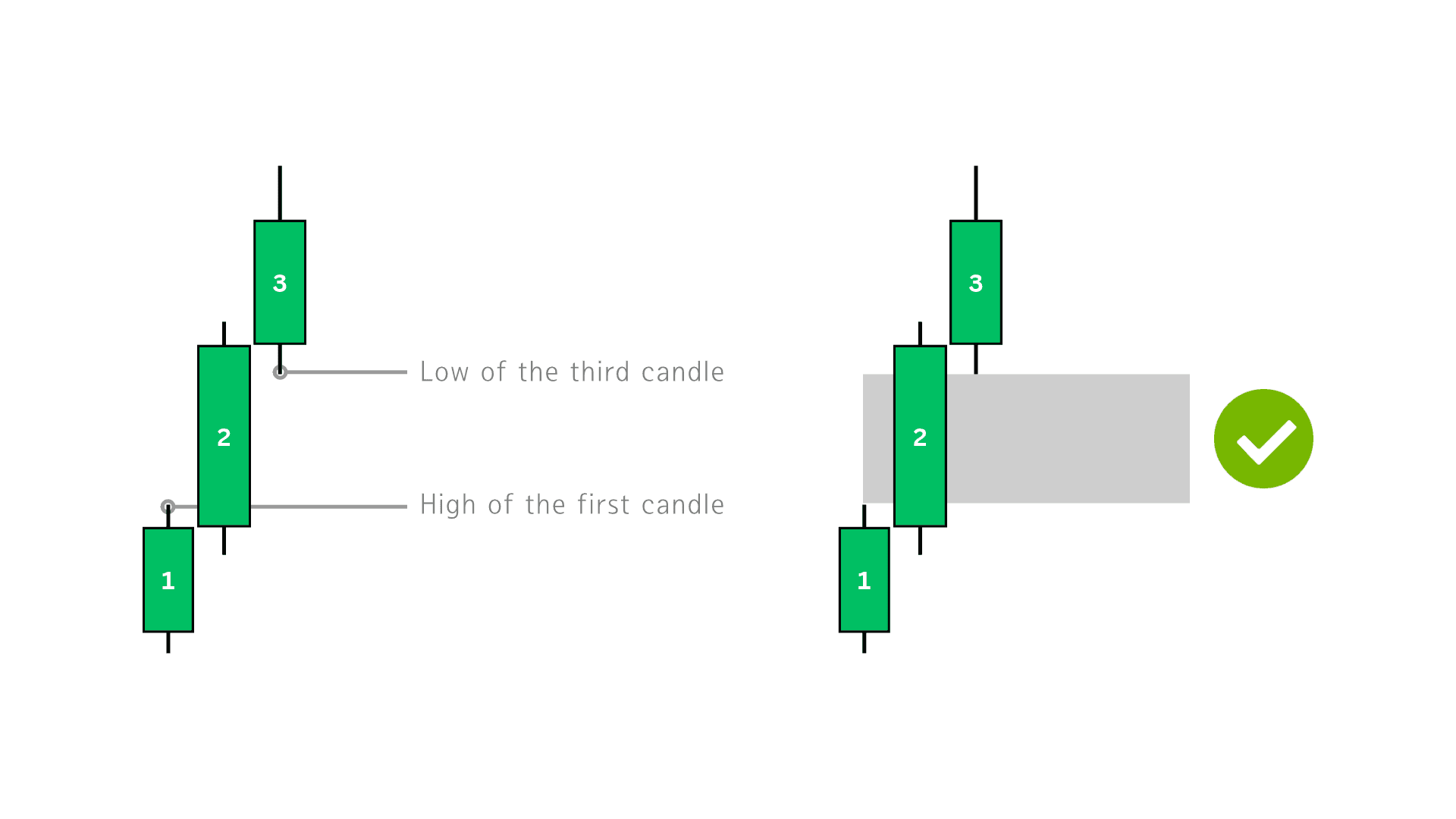
Looking at the image above, you can see that the low of the third candle did not overlap with the high of the first candle. This separation between both candles is what created the bullish Fair Value Gap.
However, in the image below, you will notice that the high of the first candle overlaps with the low of the third candle, which means no gap was left between both candles.
Since there is no visible imbalance or separation in price delivery, that formation is not considered a valid Fair Value Gap.

In a bearish scenario, the high of the third candle must not overlap with the low of the first candle. The gap left between the low of the first candle and the high of the third candle becomes the bearish Fair Value Gap.
However, in a situation where the low of the first candle overlaps with the high of the third candle, no gap is left between both candles. Since there is no imbalance in price delivery, that formation is not considered a valid bearish Fair Value Gap.

These two concepts form the primary foundation of the Internal Range Liquidity to External Range Liquidity framework.
Swing points serve as the basis for identifying External Range Liquidity, while Fair Value Gaps serve as the primary form of Internal Range Liquidity.
Understanding how these two concepts interact with each other is essential, as they form the core structure behind the entire IRL to ERL model.
Internal Range Liquidity
Internal Range Liquidity refers to liquidity found within a specific range of price.
Internal Range Liquidity is formed as price delivers from one point to another within the market. As price moves, especially during strong displacement or expansion phases, it leaves behind areas where price was not efficiently traded through. These imbalances create liquidity within the range of the move, which later becomes important for price delivery and market reaction.
In many cases, price revisits these areas before continuing toward its next objective. This is why Internal Range Liquidity often plays an important role in retracements, rebalancing, and continuation within the market.
Within this framework, any valid Fair Value Gap formed within a specific range of price will be treated as Internal Range Liquidity.

External Range liquidity
External Range Liquidity refers to liquidity found outside of a specific price range or outside the current range of price delivery.
The easiest way to identify External Range Liquidity is through swing points. Swing highs and swing lows naturally attract liquidity because they are areas where stops, pending orders, and liquidity pools commonly rest within the market.
For that reason, any significant swing point located outside the current trading range can be treated as External Range Liquidity within the IRL to ERL framework.
As price delivers through the market, it will often move from Internal Range Liquidity toward these external liquidity objectives. This is why swing highs and swing lows become important targets during price delivery and market expansion.
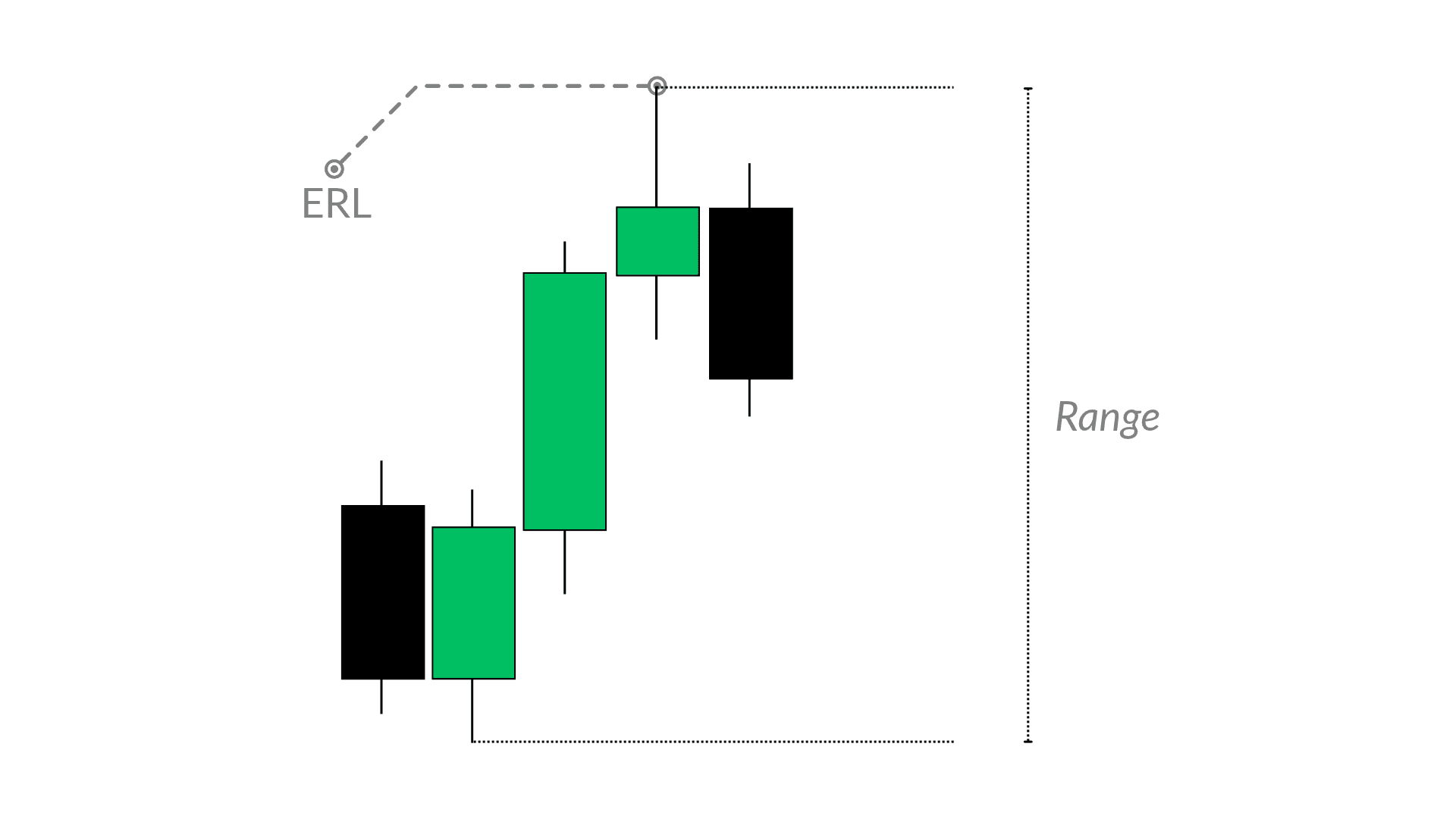
Within this framework, External Range Liquidity serves as the objective or destination of price, while Internal Range Liquidity serves as the area from which price reacts or delivers from.
IRL - ERL Through Market Structure
The concept of Internal Range Liquidity to External Range Liquidity simply states that when price reacts from an Internal Range Liquidity, the next objective of price is most likely an External Range Liquidity.

Likewise, once price takes out an External Range Liquidity, the focus then shifts back toward an Internal Range Liquidity. This creates the continuous cycle of price delivery within the market.

This is one of the reasons why the IRL to ERL framework correlates strongly with market structure. The movement from Internal Range Liquidity to External Range Liquidity closely reflects the natural formation of higher highs and higher lows in a bullish market, or lower highs and lower lows in a bearish market.
For example, in a bullish market structure, once price takes out a previous high, it will often retrace to form a higher low before continuing toward another higher high. After creating the new higher high, price again retraces to form another higher low. This cycle continues repeatedly throughout market delivery.
The main difference between traditional market structure and the IRL to ERL framework is understanding where these retracements are most likely to form.

In traditional market structure, a higher low or lower high can theoretically form anywhere. However, within the IRL to ERL framework, these retracements are expected to form within Internal Range Liquidity, specifically within Fair Value Gaps.
One of the most interesting observations about price delivery is that a large percentage of higher lows in bullish market structures, and lower highs in bearish market structures, tend to form within Fair Value Gaps before price continues toward the next External Range Liquidity objective.
Understanding this relationship between Fair Value Gaps and market structure is what gives the IRL to ERL framework its clarity and precision in market execution.
Introduction
The concept of Internal Range Liquidity to External Range Liquidity is very simple to understand. It is built around two major concepts: swing points and Fair Value Gaps.
These two concepts form the foundation of the entire framework. Swing points are used as External Range Liquidity (ERL), while Fair Value Gaps are used as Internal Range Liquidity (IRL).
Swing Point
A swing point consists of three candles, where the middle candle extends beyond the candles on either side of it. This formation is what creates a swing high or a swing low in price.
For a swing low to occur, the candle in the middle must be lower than the candle on the left and the candle on the right.
For a swing high to occur, the candle in the middle must be higher than the candle on the left and the candle on the right.
Swing points can appear in different variations, but the core concept always remains the same. As long as the middle candle extends beyond the candle on the left and the candle on the right, regardless of how the formation appears, it is still considered a valid swing point.
Fair Value Gap
A Fair Value Gap is an inefficiency in price delivery that occurs when price moves aggressively in one direction, leaving behind an imbalance in the market. This usually happens when strong buying or selling pressure causes price to move rapidly, preventing certain price levels from being efficiently traded through.
A Fair Value Gap consists of three candles.
The first candle can form normally, but the second candle must be an impulsive displacement candle showing strong momentum. The third candle then determines whether a Fair Value Gap has been created.
In a bullish scenario, the low of the third candle must not overlap with the high of the first candle. The gap left between the high of the first candle and the low of the third candle becomes the bullish Fair Value Gap.
Looking at the image above, you can see that the low of the third candle did not overlap with the high of the first candle. This separation between both candles is what created the bullish Fair Value Gap.
However, in the image below, you will notice that the high of the first candle overlaps with the low of the third candle, which means no gap was left between both candles.
Since there is no visible imbalance or separation in price delivery, that formation is not considered a valid Fair Value Gap.
In a bearish scenario, the high of the third candle must not overlap with the low of the first candle. The gap left between the low of the first candle and the high of the third candle becomes the bearish Fair Value Gap.
However, in a situation where the low of the first candle overlaps with the high of the third candle, no gap is left between both candles. Since there is no imbalance in price delivery, that formation is not considered a valid bearish Fair Value Gap.
These two concepts form the primary foundation of the Internal Range Liquidity to External Range Liquidity framework.
Swing points serve as the basis for identifying External Range Liquidity, while Fair Value Gaps serve as the primary form of Internal Range Liquidity.
Understanding how these two concepts interact with each other is essential, as they form the core structure behind the entire IRL to ERL model.
Internal Range Liquidity
Internal Range Liquidity refers to liquidity found within a specific range of price.
Internal Range Liquidity is formed as price delivers from one point to another within the market. As price moves, especially during strong displacement or expansion phases, it leaves behind areas where price was not efficiently traded through. These imbalances create liquidity within the range of the move, which later becomes important for price delivery and market reaction.
In many cases, price revisits these areas before continuing toward its next objective. This is why Internal Range Liquidity often plays an important role in retracements, rebalancing, and continuation within the market.
Within this framework, any valid Fair Value Gap formed within a specific range of price will be treated as Internal Range Liquidity.
External Range liquidity
External Range Liquidity refers to liquidity found outside of a specific price range or outside the current range of price delivery.
The easiest way to identify External Range Liquidity is through swing points. Swing highs and swing lows naturally attract liquidity because they are areas where stops, pending orders, and liquidity pools commonly rest within the market.
For that reason, any significant swing point located outside the current trading range can be treated as External Range Liquidity within the IRL to ERL framework.
As price delivers through the market, it will often move from Internal Range Liquidity toward these external liquidity objectives. This is why swing highs and swing lows become important targets during price delivery and market expansion.
Within this framework, External Range Liquidity serves as the objective or destination of price, while Internal Range Liquidity serves as the area from which price reacts or delivers from.
IRL - ERL Through Market Structure
The concept of Internal Range Liquidity to External Range Liquidity simply states that when price reacts from an Internal Range Liquidity, the next objective of price is most likely an External Range Liquidity.
Likewise, once price takes out an External Range Liquidity, the focus then shifts back toward an Internal Range Liquidity. This creates the continuous cycle of price delivery within the market.
This is one of the reasons why the IRL to ERL framework correlates strongly with market structure. The movement from Internal Range Liquidity to External Range Liquidity closely reflects the natural formation of higher highs and higher lows in a bullish market, or lower highs and lower lows in a bearish market.
For example, in a bullish market structure, once price takes out a previous high, it will often retrace to form a higher low before continuing toward another higher high. After creating the new higher high, price again retraces to form another higher low. This cycle continues repeatedly throughout market delivery.
The main difference between traditional market structure and the IRL to ERL framework is understanding where these retracements are most likely to form.
In traditional market structure, a higher low or lower high can theoretically form anywhere. However, within the IRL to ERL framework, these retracements are expected to form within Internal Range Liquidity, specifically within Fair Value Gaps.
One of the most interesting observations about price delivery is that a large percentage of higher lows in bullish market structures, and lower highs in bearish market structures, tend to form within Fair Value Gaps before price continues toward the next External Range Liquidity objective.
Understanding this relationship between Fair Value Gaps and market structure is what gives the IRL to ERL framework its clarity and precision in market execution.


Read all

Free market insights and exclusive updates, straight to your inbox.
No spam. We hate it as much as you do.
Copyright © 2025 ChartTactix. All rights reserved.
Free market insights and exclusive updates, straight to your inbox.
No spam. We hate it as much as you do.
Copyright © 2025 ChartTactix. All rights reserved.
Copyright © 2025 ChartTactix. All rights reserved.
Market insights and exclusive updates.
No spam. We hate it as much as you do.
Copyright © 2025 ChartTactix. All rights reserved.
Market insights and exclusive updates.
No spam. We hate it as much as you do.