
Fair Value Gaps (FVG)
Fair Value Gaps (FVG)
Understanding Imbalance, Displacement, and How to Use FVGs in Your Trading
Understanding Imbalance, Displacement, and How to Use FVGs in Your Trading

FAIR VALUE GAPS
A Fair Value Gap is one of the simplest concepts to understand once you know what you're looking for.
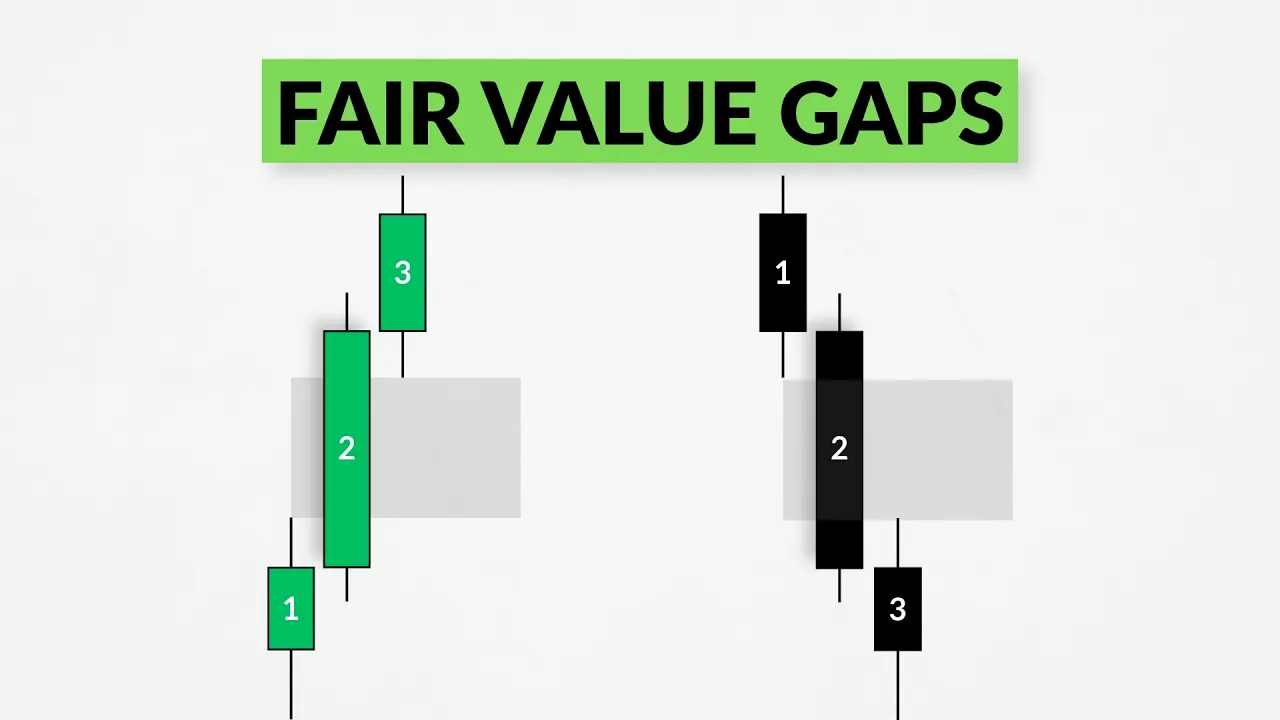
A Fair Value Gap is a three-candle imbalance that forms when price moves strongly in one direction and the first and third candles do not overlap across part of their range.
In simple terms, price moves so quickly that it leaves an area of imbalance behind.
The middle candle is usually the candle that shows the strongest displacement, while the space between the first candle and the third candle is what we identify as the Fair Value Gap.
There are two main types of Fair Value Gaps: bullish and bearish.
Bullish Fair Value Gap
A bullish Fair Value Gap forms during a strong move higher.
This happens when the high of the first candle does not overlap with the low of the third candle, leaving a space between them. That space is your bullish Fair Value Gap.

Fair Value Gaps can form in different ways. It doesn't necessarily have to be three bullish candles. The candles can be different colours and can have different shapes.
As long as the high of the first candle does not overlap with the low of the third candle, you have a bullish Fair Value Gap.

Bearish Fair Value Gap
A bearish Fair Value Gap is the opposite.
Price moves strongly to the downside, where the low of the first candle does not overlap with the high of the third candle. The space between them is the bearish Fair Value Gap.

Bearish Fair Value Gaps can also form in different ways. You won't always see three large bearish candles forming the gap.
The candles can have different colours, sizes, and shapes. What matters is that the low of the first candle does not overlap with the high of the third candle.
As long as that space exists between the two candles, you have a bearish Fair Value Gap.

Why Do Fair Value Gaps Matter?
The most important thing to understand is that a Fair Value Gap is not simply a box on your chart.
It gives you information about how price moved.
When price creates a strong displacement and leaves a Fair Value Gap behind, it shows that the market moved through that area quickly. Traders can then watch that area because price can later retrace into the imbalance to balance it before continuing in the direction of the original move.
That's what makes Fair Value Gaps useful.
Instead of chasing price after a strong move, you can wait and see if price returns to the Fair Value Gap before looking for an entry.
However, an important point is that price does not have to return to every Fair Value Gap, and every Fair Value Gap does not have to hold.
A Fair Value Gap is an area to watch, not a guarantee that price will return, reverse, or continue.
How to Trade a Fair Value Gap
The biggest mistake beginners make is treating every Fair Value Gap as an entry.
You can open almost any chart and find multiple Fair Value Gaps, some that hold and some that don't.

If every Fair Value Gap was an automatic trade, there would be no reason to consider bias, liquidity, market structure, or the overall context.
A Fair Value Gap becomes much more useful when it forms after a meaningful move and agrees with the overall market context.
For example, in a bullish scenario, price may first take sell-side liquidity. After the sweep, price makes an impulsive move higher and shifts market structure. During that move, a bullish FVG is created.
Instead of entering immediately, the FVG becomes the area to watch.
If price retraces back into the FVG, the trader can then look for the appropriate entry confirmation.
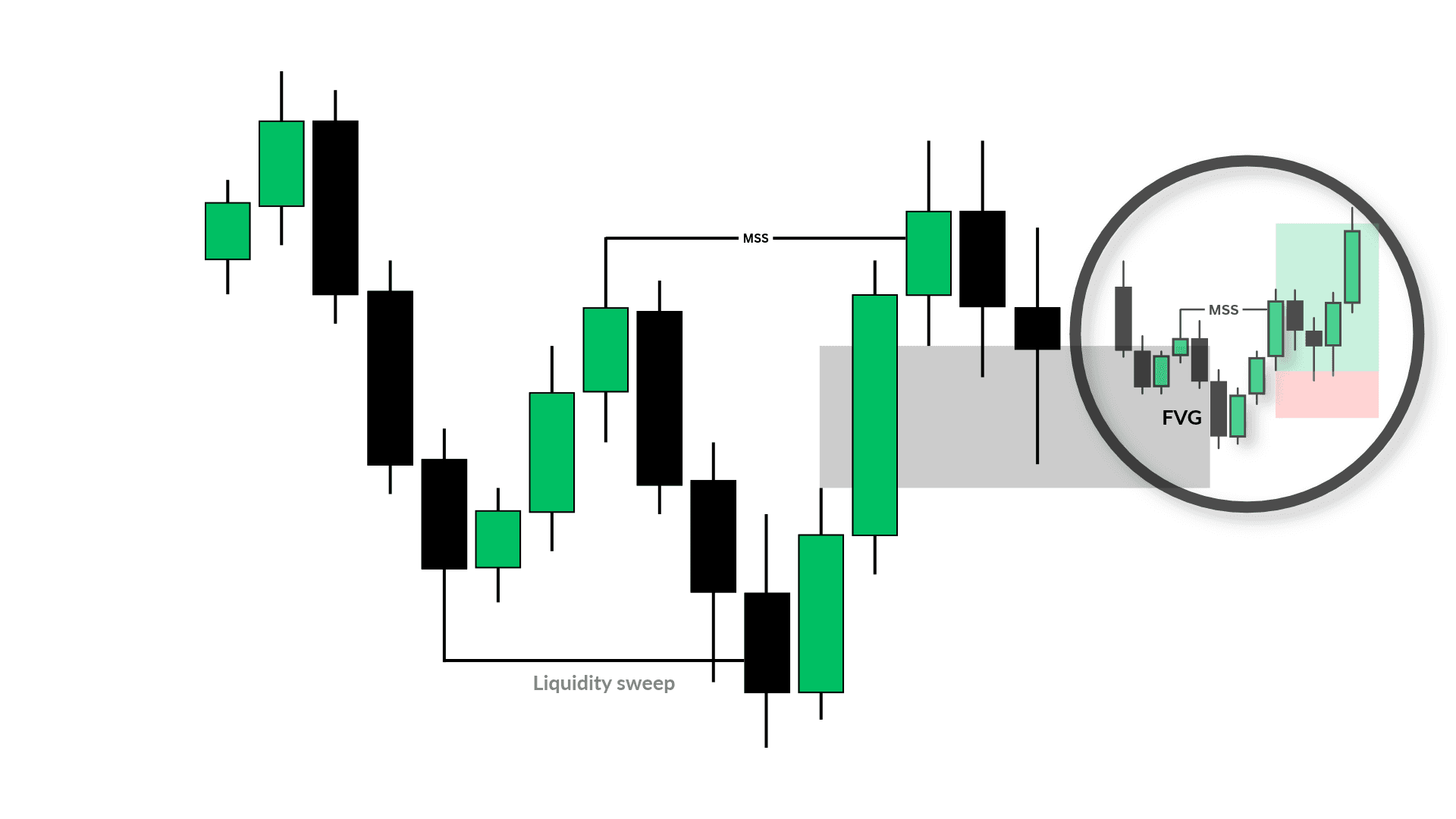
This is the type of setup where the FVG becomes more than just a random imbalance on the chart.
This gives us a simple sequence:
Liquidity → Displacement → Market Structure Shift → FVG → Retracement → Entry
That sequence is much more useful than simply marking every FVG you see.
Different Types of Fair Value Gaps
Online, you'll find a lot of people naming and explaining many different types of Fair Value Gaps. But for this framework, there are two important variations you need to understand:
Inverse Fair Value Gap
Balanced Price Range
Inverse Fair Value Gap
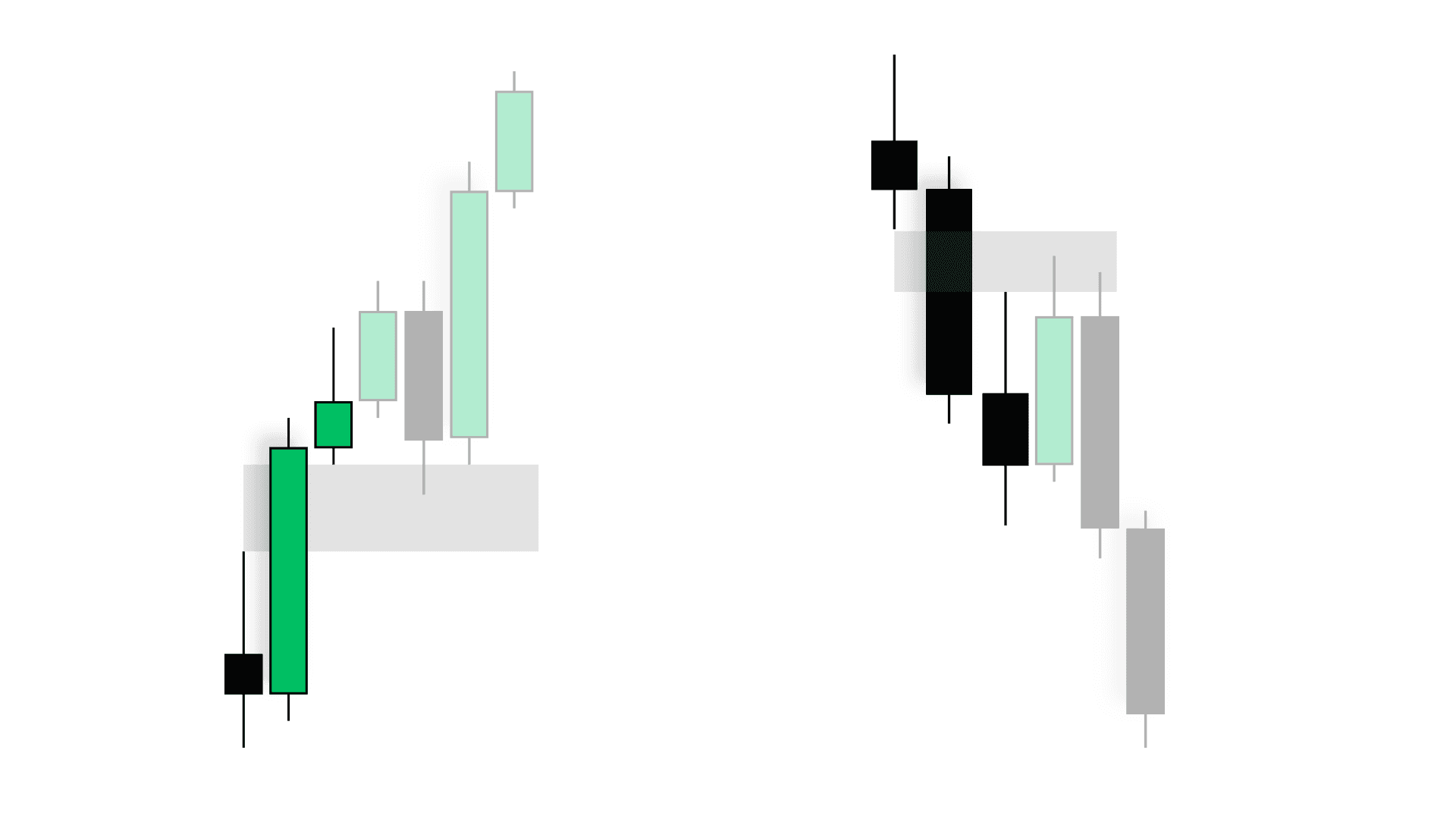
An Inverse Fair Value Gap forms when price disrespects an existing Fair Value Gap and trades through it. This usually signifies a reversal.
For example, if you have a bullish Fair Value Gap and price pushes down and closes below the FVG, that Fair Value Gap has been inversed.
The important part is the close.
If price only wicks below the bullish Fair Value Gap and closes back inside it, that does not mean the FVG has been inversed. Price is still respecting the area.
Price needs to close through the Fair Value Gap before it can be considered an Inverse Fair Value Gap.

The same thing applies to a bearish Fair Value Gap.
If price has a bearish Fair Value Gap and then pushes higher and closes above it, the bearish FVG has been inversed.

From the image above (left), you can see that initially price first wicked the fair value gap but didn't close above it but the next candle then closes above it, that becomes an Inverse Fair Value Gap while the image on the right price wasn't able to close above it after multiple tries, which means its still being respected.
Always make sure to wait for the candle closure to be sure that price has inversed a fair value gap.
Balanced Price Range
A Balanced Price Range (BPR) forms when price disrespects an existing Fair Value Gap and then creates a new Fair Value Gap in the opposite direction, with both FVGs overlapping.
The area where the two Fair Value Gaps overlap is called the Balanced Price Range.
For example, price may first create a bearish FVG and then move higher through it. During that move, price creates a bullish FVG that overlaps with the previous bearish FVG.
That overlapping area becomes the BPR.

The BPR can become a key area to watch when price is reversing because it combines the imbalance from both sides of the move.
FVG → Disrespect → Opposite FVG → Overlap = BPR

Watch Video on Youtube
FAIR VALUE GAPS
A Fair Value Gap is one of the simplest concepts to understand once you know what you're looking for.
A Fair Value Gap is a three-candle imbalance that forms when price moves strongly in one direction and the first and third candles do not overlap across part of their range.
In simple terms, price moves so quickly that it leaves an area of imbalance behind.
The middle candle is usually the candle that shows the strongest displacement, while the space between the first candle and the third candle is what we identify as the Fair Value Gap.
There are two main types of Fair Value Gaps: bullish and bearish.
Bullish Fair Value Gap
A bullish Fair Value Gap forms during a strong move higher.
This happens when the high of the first candle does not overlap with the low of the third candle, leaving a space between them. That space is your bullish Fair Value Gap.
Fair Value Gaps can form in different ways. It doesn't necessarily have to be three bullish candles. The candles can be different colours and can have different shapes.
As long as the high of the first candle does not overlap with the low of the third candle, you have a bullish Fair Value Gap.
Bearish Fair Value Gap
A bearish Fair Value Gap is the opposite.
Price moves strongly to the downside, where the low of the first candle does not overlap with the high of the third candle. The space between them is the bearish Fair Value Gap.
Bearish Fair Value Gaps can also form in different ways. You won't always see three large bearish candles forming the gap.
The candles can have different colours, sizes, and shapes. What matters is that the low of the first candle does not overlap with the high of the third candle.
As long as that space exists between the two candles, you have a bearish Fair Value Gap.
Why Do Fair Value Gaps Matter?
The most important thing to understand is that a Fair Value Gap is not simply a box on your chart.
It gives you information about how price moved.
When price creates a strong displacement and leaves a Fair Value Gap behind, it shows that the market moved through that area quickly. Traders can then watch that area because price can later retrace into the imbalance to balance it before continuing in the direction of the original move.
That's what makes Fair Value Gaps useful.
Instead of chasing price after a strong move, you can wait and see if price returns to the Fair Value Gap before looking for an entry.
However, an important point is that price does not have to return to every Fair Value Gap, and every Fair Value Gap does not have to hold.
A Fair Value Gap is an area to watch, not a guarantee that price will return, reverse, or continue.
How to Trade a Fair Value Gap
The biggest mistake beginners make is treating every Fair Value Gap as an entry.
You can open almost any chart and find multiple Fair Value Gaps, some that hold and some that don't.
If every Fair Value Gap was an automatic trade, there would be no reason to consider bias, liquidity, market structure, or the overall context.
A Fair Value Gap becomes much more useful when it forms after a meaningful move and agrees with the overall market context.
For example, in a bullish scenario, price may first take sell-side liquidity. After the sweep, price makes an impulsive move higher and shifts market structure. During that move, a bullish FVG is created.
Instead of entering immediately, the FVG becomes the area to watch.
If price retraces back into the FVG, the trader can then look for the appropriate entry confirmation.
This is the type of setup where the FVG becomes more than just a random imbalance on the chart.
This gives us a simple sequence:
Liquidity → Displacement → Market Structure Shift → FVG → Retracement → Entry
That sequence is much more useful than simply marking every FVG you see.
Different Types of Fair Value Gaps
Online, you'll find a lot of people naming and explaining many different types of Fair Value Gaps. But for this framework, there are two important variations you need to understand:
Inverse Fair Value Gap
Balanced Price Range
Inverse Fair Value Gap
An Inverse Fair Value Gap forms when price disrespects an existing Fair Value Gap and trades through it. This usually signifies a reversal.
For example, if you have a bullish Fair Value Gap and price pushes down and closes below the FVG, that Fair Value Gap has been inversed.
The important part is the close.
If price only wicks below the bullish Fair Value Gap and closes back inside it, that does not mean the FVG has been inversed. Price is still respecting the area.
Price needs to close through the Fair Value Gap before it can be considered an Inverse Fair Value Gap.
The same thing applies to a bearish Fair Value Gap.
If price has a bearish Fair Value Gap and then pushes higher and closes above it, the bearish FVG has been inversed.
From the image above (left), you can see that initially price first wicked the fair value gap but didn't close above it but the next candle then closes above it, that becomes an Inverse Fair Value Gap while the image on the right price wasn't able to close above it after multiple tries, which means its still being respected.
Always make sure to wait for the candle closure to be sure that price has inversed a fair value gap.
Balanced Price Range
A Balanced Price Range (BPR) forms when price disrespects an existing Fair Value Gap and then creates a new Fair Value Gap in the opposite direction, with both FVGs overlapping.
The area where the two Fair Value Gaps overlap is called the Balanced Price Range.
For example, price may first create a bearish FVG and then move higher through it. During that move, price creates a bullish FVG that overlaps with the previous bearish FVG.
That overlapping area becomes the BPR.
The BPR can become a key area to watch when price is reversing because it combines the imbalance from both sides of the move.
FVG → Disrespect → Opposite FVG → Overlap = BPR
Watch Video on Youtube


Read all
PREVIOUS
Build the Perfect Entry Model
PREVIOUS
Build the Perfect Entry Model
NEXT
LIQUIDITY EXPLAINED
Read all

Free market insights and exclusive updates, straight to your inbox.
No spam. We hate it as much as you do.
Copyright © 2025 ChartTactix. All rights reserved.
Free market insights and exclusive updates, straight to your inbox.
No spam. We hate it as much as you do.
Copyright © 2025 ChartTactix. All rights reserved.
Copyright © 2025 ChartTactix. All rights reserved.
Market insights and exclusive updates.
No spam. We hate it as much as you do.
Copyright © 2025 ChartTactix. All rights reserved.
Market insights and exclusive updates.
No spam. We hate it as much as you do.